Kyoto is the former capital of Japan and has many cultural heritages including food. I’ve heard that there are many vegetarian restaurants in the city, which may be partly because of Buddhist tradition. Though many Buddhist monks eat meat nowadays, there are still temples where you can have vegetarian meals. Their dishes feature a variety of soy products that help them obtain protein.
Entetsu Department Store has Kyoto Fair now. I was looking forward to it, because I expected to find many kinds of traditional vegan-friendly food there.
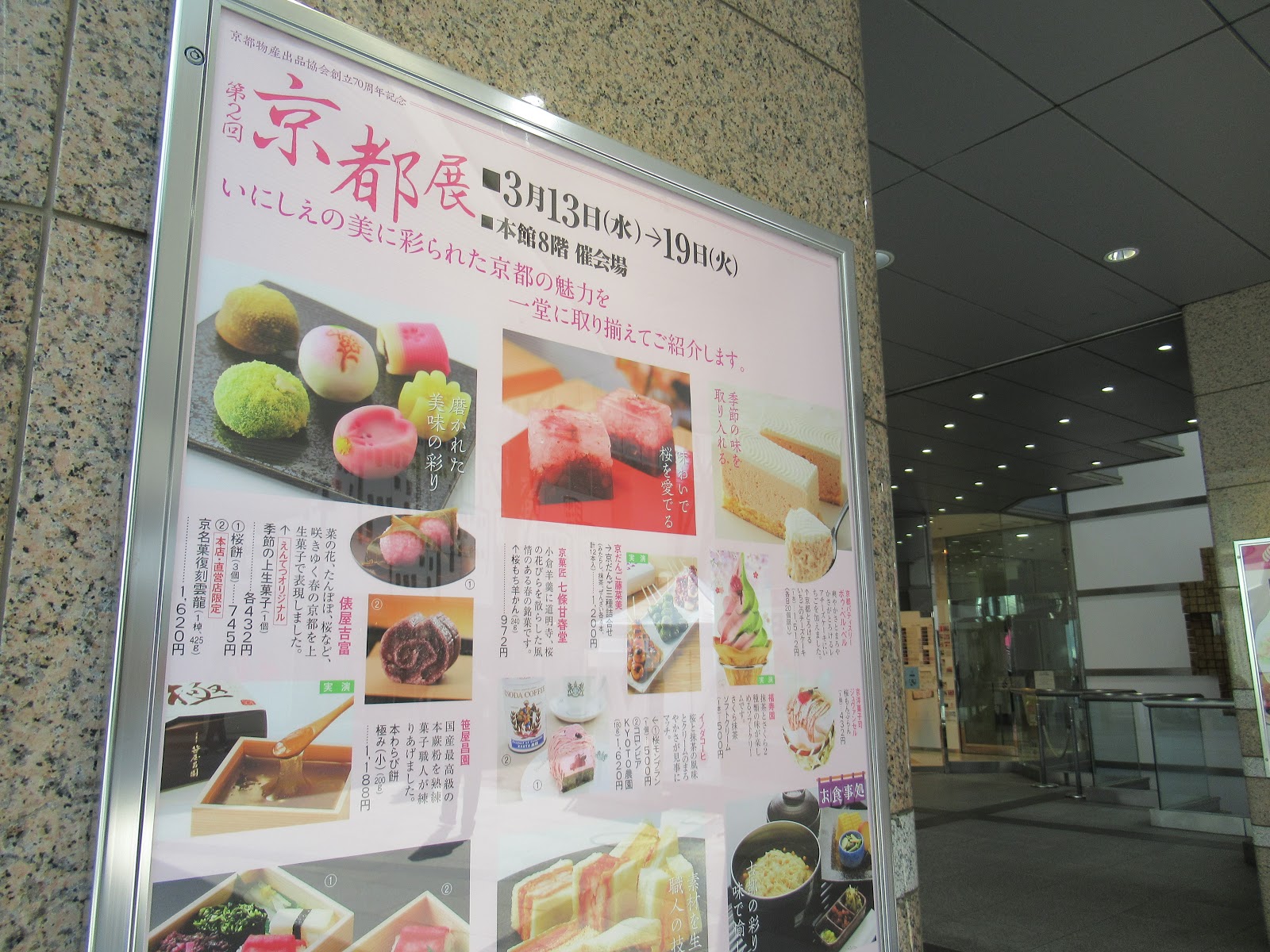
The fair was crowded with people when I went there during lunch time yesterday. It was unexpected because it was not a holiday. As I strolled through stands, I heard elegant dialect of Kyoto from several shops. One of them was Kyonoyukihonpo (京乃雪本舗) that sold various soy products, and I bought ganmodoki for dinner.
I have already introduced them before as “pseudo-goose” in this blog. They are fried tofu balls with vegetables. The ones I found in the fair were rather big and had hu or wheat gluten inside. They looked like this. The pink things are the wheat gluten, which has a shape of a cherry blossom.
Last time, I grilled ganmodoki and ate them with soy sauce and garlic. But this time, I cooked it with tomatoes, garlic, and salt.
They were not bad. The flavor of tomatoes matched them, and the wheat gluten inside was soft and elastic. But I still thought that it was better to grill them. Fortunately, there are still two pieces left.
In the fair, there were some other shops that sold soy products. One of them was Yubaya (湯葉弥) that specializes in yuba or soy milk skins. They provide raw yuba, dried yuba, yuba cooked with other ingredients, and so on. I bought fried rolled yuba with pickled plums and shiso or Japanese basil.
I ate them with soy sauce. The flavors of the plums and shiso were not so strong. I thought they might be suitable to eat with beer though I can’t drink alcohol so much.
Yesterday was March 15, the day of “FridayForFuture.” It is a school strike movement that was started by a Swedish climate activist Greta Thunberg. Many young people in more than 120 countries in the world participated in it, responding Greta’s call. They required world leaders to take actions for global warming. In Japan, people gathered in Tokyo and Kyoto. It was inspiring. I wish those participated in FridayForFuture are or will become vegetarians or vegans because it is inevetable to reduce consumption of meat if you really want to stop climate change. Greta is a vegan and travels to other European countries by trains instead of airplanes. She is a girl of her word.
Introduction of Delicious Food, Restaurants, and Sightseeing Spots
Saturday, March 16, 2019
Thursday, March 14, 2019
Spring princess from Kagoshima Prefecture
As Hamamatsu is one of the major cultivating areas of mandarin oranges in Japan, you can find some local brands, especially the Mikkabi brand, in every supermarket here. It may be difficult to find mandarin oranges from other regions, however, there are some other citrus fruits instead, which were cultivated in Ehime Prefecture or prefectures in Kyushu.
The other day, I saw kinkan from Kagoshima Prefecture sold in plastic containers in the basement of May One. Kinkan is a little citrus fruit with a diameter of around 3 cm. It is often used for a New Year’s dish, but I had never eaten one as it is. According to the description, their kinkan can be eaten without peeling the skins. The brand name is “Harumime (春姫)” that means a spring princess. They surely looked lovely.
As they were intended to be eaten with the skins, I thought they might be bitter like marmalade. When I ate them, I found that they were not so bitter as I expected. However, they were not very sweet, either, a little bit sour. In addition, they contained many seeds, and the skins were thick.
This was my first time to eat citrus fruits with the skins on. While chewing them and feeling the slight bitterness, I got interested in the nutrition. According to information on the Internet, one kinkan contains almost as much vitamin C as a lemon. It also contains calcium, beta-carotene, vitamin E, etc. Furthermore, it is said that kinkan are good to eat when you have a sore throat or a cough. If I had a cold, I would like to drink black tea with kinkan jam.
The other day, I saw kinkan from Kagoshima Prefecture sold in plastic containers in the basement of May One. Kinkan is a little citrus fruit with a diameter of around 3 cm. It is often used for a New Year’s dish, but I had never eaten one as it is. According to the description, their kinkan can be eaten without peeling the skins. The brand name is “Harumime (春姫)” that means a spring princess. They surely looked lovely.
As they were intended to be eaten with the skins, I thought they might be bitter like marmalade. When I ate them, I found that they were not so bitter as I expected. However, they were not very sweet, either, a little bit sour. In addition, they contained many seeds, and the skins were thick.
Monday, March 11, 2019
Risotto with potato chips
In Hamamatsu, you can see this smiling mark with logo in many places. It represents Kyorindo (杏林堂), a local drug store chain.
Today, I went to their shop in May One in the building of the train station. There were two kinds of potato chips available, and I intended to buy ones flavored with black pepper. But I found a bunch of recipe cards for potato chips “SEA SALT ONLY.” So, I bought this kind instead. I had never imagined before that potato chips can be used for cooking!
As you see on the pack, they are olive oil kettle cooked potato chips. The ingredients are just three: potatoes, olive oil, and sea salt. The net weight is 70g, and I think it is a suitable portion for me to eat at a time. This time, I made “Simple Risotto.” The original recipe included ingredients such as milk and a slice of cheese, but I changed the recipe like this.
1. Put two cups of cooked rice, 100 cc of soya milk, and a little soy sauce in a pot.
(I added some more soy milk later)
2. Warm them up and loose the cooked rice.
3. Put 35g of potato chips (one half of the portion) after crushing them in the pack.
4. Sprinkle some nutritional yeast to mix in the risotto.
Nutritional yeast is a source of vitamin B12 that is well known among vegans. It resembles powdered cheese, and I often use it for pasta. I think it was also suitable for risotto. My risotto looked quite different from the one on the recipe, but I was satisfied.
It was good, substantial, and simple to make. While eating, I thought of making it again by using some almond powder in addition to the nutritional yeast.
After a while, I ate the rest of potato chips.
They were crispy but I was a little surprised to feel how oily they were. When I ate the risotto, I didn’t notice such oiliness at all. How strange!
Today, I went to their shop in May One in the building of the train station. There were two kinds of potato chips available, and I intended to buy ones flavored with black pepper. But I found a bunch of recipe cards for potato chips “SEA SALT ONLY.” So, I bought this kind instead. I had never imagined before that potato chips can be used for cooking!
As you see on the pack, they are olive oil kettle cooked potato chips. The ingredients are just three: potatoes, olive oil, and sea salt. The net weight is 70g, and I think it is a suitable portion for me to eat at a time. This time, I made “Simple Risotto.” The original recipe included ingredients such as milk and a slice of cheese, but I changed the recipe like this.
1. Put two cups of cooked rice, 100 cc of soya milk, and a little soy sauce in a pot.
(I added some more soy milk later)
2. Warm them up and loose the cooked rice.
3. Put 35g of potato chips (one half of the portion) after crushing them in the pack.
4. Sprinkle some nutritional yeast to mix in the risotto.
Nutritional yeast is a source of vitamin B12 that is well known among vegans. It resembles powdered cheese, and I often use it for pasta. I think it was also suitable for risotto. My risotto looked quite different from the one on the recipe, but I was satisfied.
After a while, I ate the rest of potato chips.
They were crispy but I was a little surprised to feel how oily they were. When I ate the risotto, I didn’t notice such oiliness at all. How strange!
Thursday, March 7, 2019
Marche du Soramo - Outdoor market selling local specialties
When the weather is fine, I sometimes go out during lunch time and stroll in downtown. Between the old building and the new building of Entetsu Department Store, there is a space called Soramo, Marche du Soramo is an outdoor market held there several times in a month. There you can buy fresh vegetables, tea, hand-made sweets and foods from local farms, as well as flowers, handicrafts, and some fancy goods.
Today, I found canola with flowers and some other edible plants on a long table. They looked so similar that I couldn’t distinguish them very well, though their names were presented in front of them. The farmer who sold them explained one by one and how to eat them.
As for canola flowers, he recommended me to eat them by adding sesame after boiling. He said that he had eaten it as an appetizer when he traveled to China. I got interested in it and bought a pack of canola. This is what I had for dinner, boiled canola flavored with soy sauce and ground sesame. It is difficult to explain the taste of canola, but it had a pronounced flavor of a vigorous plant. “That’s why I like vegetarian diet“, I thought.
From the same farmer in the market, I bought also colorful tomatoes and cauliflore, a new type of cauliflower. The farmer said that they cultivate 12 colors of tomatoes and sell them to restaurants and a cruise ship.
Cauliflore was the most interesting vegetable I saw at the market. I had eaten just white cauliflower before, but cauliflore on sale were violet, yellow, greenish yellow, and white. With these, I also made soup for dinner.
In the soup, there were also onion, potato, and brussels sprouts. They were cooked with water and soya milk, and the soup was flavored with salt and hard tips of shiitake mushroom (taken out later). In addition, I used almond powder. Vegetables in Marche du Soramo are sold at a reasonable price, but you can make rich soup with them.
Today, I found canola with flowers and some other edible plants on a long table. They looked so similar that I couldn’t distinguish them very well, though their names were presented in front of them. The farmer who sold them explained one by one and how to eat them.
As for canola flowers, he recommended me to eat them by adding sesame after boiling. He said that he had eaten it as an appetizer when he traveled to China. I got interested in it and bought a pack of canola. This is what I had for dinner, boiled canola flavored with soy sauce and ground sesame. It is difficult to explain the taste of canola, but it had a pronounced flavor of a vigorous plant. “That’s why I like vegetarian diet“, I thought.
From the same farmer in the market, I bought also colorful tomatoes and cauliflore, a new type of cauliflower. The farmer said that they cultivate 12 colors of tomatoes and sell them to restaurants and a cruise ship.
Cauliflore was the most interesting vegetable I saw at the market. I had eaten just white cauliflower before, but cauliflore on sale were violet, yellow, greenish yellow, and white. With these, I also made soup for dinner.
In the soup, there were also onion, potato, and brussels sprouts. They were cooked with water and soya milk, and the soup was flavored with salt and hard tips of shiitake mushroom (taken out later). In addition, I used almond powder. Vegetables in Marche du Soramo are sold at a reasonable price, but you can make rich soup with them.
Monday, March 4, 2019
Vegan sweets in March
Last
month, I introduced ichigo daifuku and uguisumochi of Mataichian (又一庵) in Entetsu
Department Store. Since Mataichian makes good bean paste, you’ll never be disappointed
with any of their sweets. But the shop is most famous for its kintsuba.
Kintsuba
is a sweet that is usually made of adzuki bean paste wrapped in a thin wheat
flour skin. In addition to this typical one, Mataichian makes some variations
according to seasons. Now they have cherry kintsuba.
The
skin is pale pink, adding a tone of spring. The inside is coarse white bean
paste. And it has a real cherry blossom on top! It is salted but still has
fragrance. I think this is one of the most springlike sweets in Entesu Department
Store.
In
addition to this kintsuba, mataichian has some other spring sweets. One of them
is sakuramochi, It is a very popular sweet sold in many confectionery shops, supermarkets,
and convenience stores at this time of year. When I came to Mataichian today,
all sakuramochi for individual selling were sold out. There were only packs containing
two pieces respectively. So, I went to another shop Seikanin (清閑院) in the basement of
the department store to buy one.
Sakuramochi
has also a pink color. It is wrapped with a salted cherry leaf whose flavor goes
very well with the sweet adzuki paste inside. The outside is made of Domyojiko
rice flour and has a texture of crushed rice. If you think Japanese sweets are
monotonous with just adzuki bean paste, try sakuramochi! I love its unique
taste and texture.
In
fact, there are two kinds of sakuramochi, and the one I ate is Kansai (Western Japan)
style. The other sakuramochi is Kanto (Eastern Japan) style. Maybe I’ll introduce
it some other day. I found a shop that sells Kanto style sakuramochi, but I got
interested in other kind of sweet there. It was two-color dumplings.
One
of the dumplings was pink and stuffed with white bean paste, and the other was green
with mugwort and stuffed with adzuki bean paste. And they were wrapped with a
salted cherry leaf. What a gorgeous combination!
I
bought this in Shunkado (春華堂), one of the best-known confectionery shop in Hamamatsu.
It is famous for its eel pie, but it was originally a Japanese confectionery
shop and has some unique sweets.
Saturday, March 2, 2019
Vegan tempura and sushi from Bio Atsumi
I
went to see cherry blossoms in the morning. There weren’t many buses from there,
and it took more than one hour to go back. When I arrived at the bus terminal
near the train station, it was over 12:00. I didn’t feel like preparing lunch
at home, so I went to Bio Atsumi to look for ready-to-eat food. This time, I
bought inarizushi and kakiage.
Inarizushi is sushi rice stuffed in deep-fried tofu skins. Since tofu skins are sometimes flavored with dried-bonito broth, inarizushi is not always vegan. But the one sold in Bio Atsumi is vegan as the tofu skins are flavored with soy sauce, sugar, sweet cooking rice wine, and salt.
Kakiage
is a kind of tempura with mixed vegetable strips, shrimps, etc. Bio Atsumi has
two kinds of vegan kakiage. One of them contains carrot, onion, and leek strips.
The other contains pumpkin, sweet potato, and carrot strips, and sesame. I think
the batter is also vegan because egg is not indicated as a food allergen contained
in kakiage.
Though
I like fried food, I don’t make tempura at home because handling of oil is too
much work. Today I ate kakiage after a long time. I felt they were more substantialicious
than they looked, but the combinations of vegetables, especially pumpkin and
sweet potato, were good. Maybe I like kakiage better than ordinary tempura with
just one kind of vegetable.
Cherry blossoms & canola flowers
Today I went to see Kawazuzakura, a kind of cherry tree famous for its early blooming. It originated in Kawazu-cho in Izu Peninsula in the east part of Shizuoka Prefecture. Last Monday, I learned from local newspaper that this weekend would be the best time to see Kawazuzakura in Hamamatsu. This morning, I took the bus #41 from the bus terminal near the train station to Hanakawa Undo Koen.
It took about 50 minutes to get there. It was the last bus stop located near Hanakawa Sports Park. From there, I couldn’t see any cherry blossoms. As I walked westward in the park, I found some people who seemed to go to the same destination as I did. On the way there, I found a tree with blossoms. This may be a cherry tree, but not Kawazuzakura.
Kawazuzakura were planted on both banks of the river Hanakawa. I learned later that there are 400 trees. They were in full bloom, and their pink color was seen in distance as I appoached. There were already many people walking on both sides.
On the other side of the river, there were also canola flower fields looking like yellow carpets.
There were some stalls that sold foods. I bought skewered dumplings with sweet soy sauce prepared on the spot. They sold two skewers just for 100 yen! The dumplings seemed popular as there was a long queue. They were fresh and warm.
The length of the row of cherry trees is 1 km. I crossed the bridge to walk on the other side.
This side was more beautiful with the canola flower fields.
You could also walk through the fields.
The weather was fine and warm. People were enjoying the bright colors of the two kinds of flowers. It was really a spring day!
It took about 50 minutes to get there. It was the last bus stop located near Hanakawa Sports Park. From there, I couldn’t see any cherry blossoms. As I walked westward in the park, I found some people who seemed to go to the same destination as I did. On the way there, I found a tree with blossoms. This may be a cherry tree, but not Kawazuzakura.
Kawazuzakura were planted on both banks of the river Hanakawa. I learned later that there are 400 trees. They were in full bloom, and their pink color was seen in distance as I appoached. There were already many people walking on both sides.
On the other side of the river, there were also canola flower fields looking like yellow carpets.
There were some stalls that sold foods. I bought skewered dumplings with sweet soy sauce prepared on the spot. They sold two skewers just for 100 yen! The dumplings seemed popular as there was a long queue. They were fresh and warm.
The length of the row of cherry trees is 1 km. I crossed the bridge to walk on the other side.
This side was more beautiful with the canola flower fields.
You could also walk through the fields.
The weather was fine and warm. People were enjoying the bright colors of the two kinds of flowers. It was really a spring day!
Subscribe to:
Posts (Atom)
Happy New Year of Ox 2021
If you are in Japan during the year-end and New Year holidays, you can see many pretty sweets at Japanese confectionary stores. As 2021 is t...
-
Several months ago, I read about vegan noodle “Shin Ramen (Shin Ramyeon/Shin Ramyun)” made by a food company Nongshim in Korea on the Intern...
-
In Japan, vegetarians or vegans may sometimes feel themselves unwelcome in restaurants, because it is very difficult to find substantial dis...
-
Tianjin sweet roasted chestnuts (天津甘栗 (tenshin-amaguri)) or sweet chestnuts (甘栗(amaguri)) are one of popular snacks in Japan. They are avail...