Now is the season of cherry blossoms, and you can find many sweets related to them. The most famous one may be sakuramochi, which literally mean a cherry rice cake. In this stamp, you can see two different kinds of sakuramochi. The left one is in Kanto (eastern Japan) style, and the right one is in Kansai (western Japan) style.
Last month I introduced sakuramochi in Kansai style. Here in Hamamatsu, it is more prevailing than the one in Kanto style, and you can find it not only in Japanese-style confectionary stores but also in supermarkets and convenience stores. In fact, I had never eaten sakuramochi in Kanto style before because it is rather uncommon. However, I finally bought one in Shunkado (春華堂), one of the best-known confectionary stores in Hamamatsu. Their specialty is unagi (eel) pie, but they also make traditional Japanese sweets.
As with sakuramochi in Kansai style, this one was wrapped with a salted cherry leaf. Its scent was noticeable even before I opened the package. It was stuffed with adzuki bean paste, which was also the same as the one in Kansai style. The difference was that this sakuramochi was made from wheat flour, mixture of glutinous rice, starch, and salt, etc. while the other was made from rice flour. It looked like a pink crepe, but it was more elastic because of the mixture of different kinds of flour. It had an interesting texture. I thought the flavors of the cherry leaf and adzuki paste were not very different from those of the one in Kansai style. This sakuramochi was also good, but personally, I prefer the one in Kansai style.
In addition to cherry-related sweets, I found very springlike sweets in the basement of Entetsu Department Store. In the main building, there is a section “Enshu Gourmet” where foods produced in Enshu or eastern Shizuoka Prefecture are sold. Yesterday, I bought two sweets from Tamachi Baigetsu (田町梅月) . One of them was “Butterfly.”
This was a kind of sweet called nerikiri. It looked like marzipan but was made from sugar, white kidney beans, adzuki bean, yam, malt syrup, glutinous rice flour, agar, and gardenia for coloring. I have seldom seen an insect-shaped sweet like this, but it was pretty. When I tasted it, I regretted not having prepared tea because it was so sweet! It was surely supposed to be eaten with green tea.
The other one was “Dandelion” which was made from almost the same ingredients as “Butterfly”, but it didn’t contain yam. The flower and the leaves of the dandelion were made finely. This kind of sweet is called kanoko and consists of a ball of bean paste covered with azduki beans.
As I expected, it was also very sweet. But this time, I had green tea that I bought at JR Hamamatsu Station.
I have two kinds of Japanese tea at home. One is hojicha or roasted green tea, and the other is genmaicha or green tea with roasted brown rice. With “Dandelion”, I drank genmaicha, but it didn’t match the sweet! Genmaicha is tasty tea in itself with the flavor of rice, however, it wasn’t bitter enough to mitigate the sweetness! Ordinary green tea or black coffee may have been the best drink for it.
Introduction of Delicious Food, Restaurants, and Sightseeing Spots
Thursday, April 4, 2019
Tuesday, April 2, 2019
Drive to Horaiji (5) - Floating bridge in dream
After leaving Mokkulu, we didn’t drop in any other places in Aichi Prefecture but returned directly to Hamamatsu. Flowers in the mountain area were beautiful, and I though it was a pity that I couldn’t take pictures from the running car. But in Okuyama, where a large temple Hokoji is located, my mother stopped the car to let me take pictures. This is Okuyama Park with a wooden floating bridge on a pond. Beyond the trees, I could also see the pagoda of Hokoji Temple. Some cherry trees were almost in full bloom and looked splendid.
I walked on the long bridge called “floating bridge in a dream.” According to my mother, there are carps in the pond. But I was so absorbed in the cherry blossoms and other flowers that I didn’t notice them. I learned later that this park is lit up like other cherry-viewing spots during the night. You can enjoy a dreamlike view with cherry blossoms reflected on the surface of the water.
Hokoji Temple is a magnificent temple where visitors can experience zen meditation, for example. I think I’ll introduce the temple someday. This time, we left the place after I took pictures. After that, we dropped in the last destination, JA Topia Hamamatsu Farmer’s Market Mikatabara Store.
My mother often goes to this store. Recently, she has started drinking soy milk sold there. When I drank it at my parents’ house for the first time, I was surprised because it was much thicker compared with other soy milk available in ordinary supermarkets. It is expensive, but I think it is worthy to pay the price. So, I bought one bottle myself this time. The producer of soy milk is an old tofu shop Marumori (丸守) founded in 1897. In addition to this, I bought a pack of rice cakes with soy beans in them.
Now I still wonder how I should use this soy milk. I’m thinking of making buckwheat pancakes with it, but I’m not sure.
I walked on the long bridge called “floating bridge in a dream.” According to my mother, there are carps in the pond. But I was so absorbed in the cherry blossoms and other flowers that I didn’t notice them. I learned later that this park is lit up like other cherry-viewing spots during the night. You can enjoy a dreamlike view with cherry blossoms reflected on the surface of the water.
Hokoji Temple is a magnificent temple where visitors can experience zen meditation, for example. I think I’ll introduce the temple someday. This time, we left the place after I took pictures. After that, we dropped in the last destination, JA Topia Hamamatsu Farmer’s Market Mikatabara Store.
My mother often goes to this store. Recently, she has started drinking soy milk sold there. When I drank it at my parents’ house for the first time, I was surprised because it was much thicker compared with other soy milk available in ordinary supermarkets. It is expensive, but I think it is worthy to pay the price. So, I bought one bottle myself this time. The producer of soy milk is an old tofu shop Marumori (丸守) founded in 1897. In addition to this, I bought a pack of rice cakes with soy beans in them.
Now I still wonder how I should use this soy milk. I’m thinking of making buckwheat pancakes with it, but I’m not sure.
Drive to Horaiji (4) - Local specialties in markets
After leaving Horaiji, we dropped in a farmer’s market Kontaku Nagashino (こんたく長篠). In the same building, there was a big beef barbecue restaurant. So, I didn’t feel like taking a picture of the premises. But the farmers’ market itself was interesting.
As in farmers’ markets in Shizuoka Prefecture, there were many fresh vegetables and fruits sold at reasonable prices. But I was more interested in processed food. In Horaiji, we had a lunch set that included sashimi konnyaku. Konnyaku is one of the specialties in this mountain area in the eastern Aichi Prefecture, and they provided various types such as ball-shaped konnyaku, three-colored konnyaku, konnyaku noodles, and sashimi kyonnyaku. There was also sauce sold separately, and my mother bought it. Maybe it can be also used for some other food.
Near the shelves of konnyaku, they had dried shiitake and tea.
I found some products that looked delicious, but I intended to buy something in the next destination. It was Michi-no-eki Mokkulu Shinshiro located near Shinshiro IC of Shin-Tomei Expressway.
Inside of Mokkulu looked like a fashionable supermarket. It was crowded with people, especially families with children. I thought it was a nice place to spend the weekend. There were many kinds of local products including sweets, but I remembered that I had eaten too many sweets recently. So, I just bought a rice ball with nozawana or turnip greens to eat for dinner.
Beside the building of Mokkulu, there was a little shop selling goheimoshi. It is a specialty of the mountainous areas in Central Japan including Aichi Prefecture. The goheimochi we ate there was a typical type: a flat cake of mashed rice skewered and grilled with sauce, but it was bigger than those I had seen before!
After we finished eating goheimochi, we took a free foot bath near the parking area. It was very refreshing to soak my feet in hot water. According to their website, this water is from Yuya Spa with a history of 1,300 years.
Finally, we returned to our car. Then, my mother took out something she bought in the building. They were karinto manjyu or little fried buns with adzuki bean paste inside. She game me one of them. It was a simple sweet but was very good with the thick fried surface, smooth azuki paste, and the flavor of black sugar. I have to remember the shop’s name Sakaeya (さかえや) that made this karinto manjyu so that I can find it again.
As in farmers’ markets in Shizuoka Prefecture, there were many fresh vegetables and fruits sold at reasonable prices. But I was more interested in processed food. In Horaiji, we had a lunch set that included sashimi konnyaku. Konnyaku is one of the specialties in this mountain area in the eastern Aichi Prefecture, and they provided various types such as ball-shaped konnyaku, three-colored konnyaku, konnyaku noodles, and sashimi kyonnyaku. There was also sauce sold separately, and my mother bought it. Maybe it can be also used for some other food.
Near the shelves of konnyaku, they had dried shiitake and tea.
I found some products that looked delicious, but I intended to buy something in the next destination. It was Michi-no-eki Mokkulu Shinshiro located near Shinshiro IC of Shin-Tomei Expressway.
Inside of Mokkulu looked like a fashionable supermarket. It was crowded with people, especially families with children. I thought it was a nice place to spend the weekend. There were many kinds of local products including sweets, but I remembered that I had eaten too many sweets recently. So, I just bought a rice ball with nozawana or turnip greens to eat for dinner.
Beside the building of Mokkulu, there was a little shop selling goheimoshi. It is a specialty of the mountainous areas in Central Japan including Aichi Prefecture. The goheimochi we ate there was a typical type: a flat cake of mashed rice skewered and grilled with sauce, but it was bigger than those I had seen before!
In fact, the sauce of this goheimochi contained bonito broth. After I ordered two skewers of goheimochi, I had to wait for a while. Then I found that the sauce was on sale and read the label of ingredients. In many cases, the sauce of goheimochi is vegan, but not always!
After we finished eating goheimochi, we took a free foot bath near the parking area. It was very refreshing to soak my feet in hot water. According to their website, this water is from Yuya Spa with a history of 1,300 years.
Finally, we returned to our car. Then, my mother took out something she bought in the building. They were karinto manjyu or little fried buns with adzuki bean paste inside. She game me one of them. It was a simple sweet but was very good with the thick fried surface, smooth azuki paste, and the flavor of black sugar. I have to remember the shop’s name Sakaeya (さかえや) that made this karinto manjyu so that I can find it again.
Monday, April 1, 2019
Drive to Horaiji (3) - Prohibition of hunting and fishing
Horaiji Temple is a Buddhist temple founded in 703. A famous haiku poet Matsuo Basho visited there in 1691, and we saw his statue with an owl on his head while we were walking further after lunch. He looked humorous. My mother, who started to learn haiku a week ago, put a coin on the statue. In addition to the animals in the picture, there was also a frog. I remembered his haiku “The ancient pond / A frog leaps in / The sound of the water (translated by Donald Keene).”
Near the statue of Matsuo Basho, there was an old road, which led to Akiha Shrine in Haruno-cho in Hamamatsu, 34 km away from there. The shrine was founded in 709 and enshrines the god of fire. In old days, people in the Horaiji area used to visit there along this road to pray for protection from fire because their houses with thatched roof were easy to catch fire and burn. Ahiha Shrine had many visitors not only from eastern Aichi Prefecture including Horaiji but also from western Shizuoka Prefecture, and southern Nagano Prefecture.
As we continued walking along the pathway to Horaiji Temple, I found some interesting things. But I just took a picture of this beautiful tree because it rained sometimes.
Finally, we arrived at the entrance of the premises of Horaiji Temple. To reach the main building, you have to climb as many as 1,425 steps (1 km), and we didn’t do that.
On the other side of the road, there was a monument with “殺生禁断 (sessyo kindan)” carved on the stone. It means prohibition of hunting and fishing based on the Buddhist teachings, which is in force on the premises of this temple. Though this is a very basic rule in Buddhism, I had never seen a temple that expressively prohibited people from killing animals before. On the contrary, some big temples even allow stalls to sell snacks containing meat or fish on their premises during festivals. So, this monument was very impressive.
On our way back to the parking area, the weather became better. So, I started taking pictures. This is a magnolia tree.
A place with a beautiful scenery. I learned later it was a hotel Unryuso (雲竜荘).
I took this picture after passing by this house. It’s an old inkstone shop.
Blue sky, green mountains, cherry blossoms,
and a beatiful tree again.
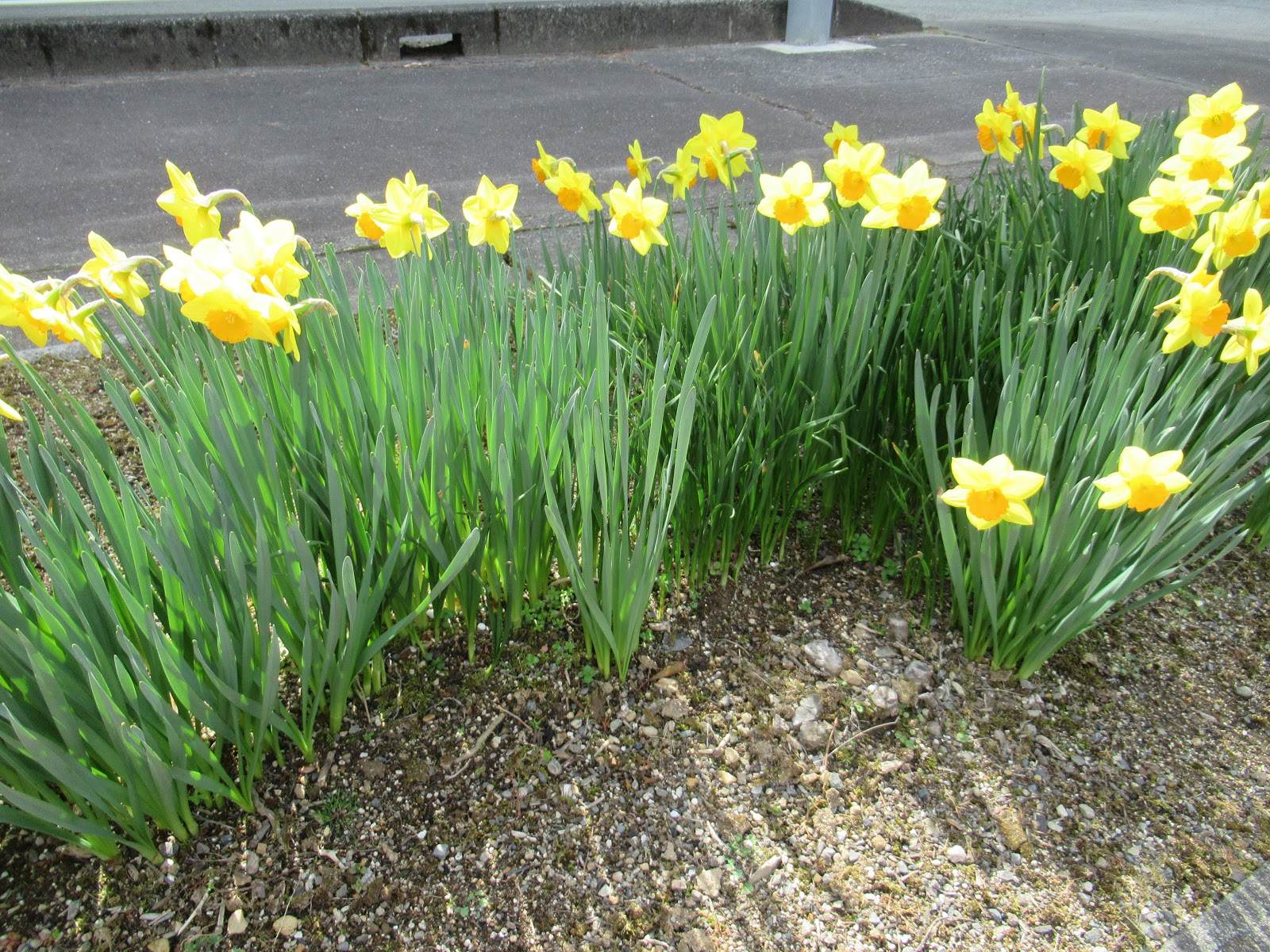
Even in the parking area, there were narcissus with vivid colors. Horaiji had so many flowers!
Near the statue of Matsuo Basho, there was an old road, which led to Akiha Shrine in Haruno-cho in Hamamatsu, 34 km away from there. The shrine was founded in 709 and enshrines the god of fire. In old days, people in the Horaiji area used to visit there along this road to pray for protection from fire because their houses with thatched roof were easy to catch fire and burn. Ahiha Shrine had many visitors not only from eastern Aichi Prefecture including Horaiji but also from western Shizuoka Prefecture, and southern Nagano Prefecture.
As we continued walking along the pathway to Horaiji Temple, I found some interesting things. But I just took a picture of this beautiful tree because it rained sometimes.
Finally, we arrived at the entrance of the premises of Horaiji Temple. To reach the main building, you have to climb as many as 1,425 steps (1 km), and we didn’t do that.
On the other side of the road, there was a monument with “殺生禁断 (sessyo kindan)” carved on the stone. It means prohibition of hunting and fishing based on the Buddhist teachings, which is in force on the premises of this temple. Though this is a very basic rule in Buddhism, I had never seen a temple that expressively prohibited people from killing animals before. On the contrary, some big temples even allow stalls to sell snacks containing meat or fish on their premises during festivals. So, this monument was very impressive.
On our way back to the parking area, the weather became better. So, I started taking pictures. This is a magnolia tree.
I took this picture after passing by this house. It’s an old inkstone shop.
Blue sky, green mountains, cherry blossoms,
and a beatiful tree again.
Even in the parking area, there were narcissus with vivid colors. Horaiji had so many flowers!
Drive to Horaiji (2) - Local cuisine “nameshi dengaku”
Along the pathway to Horaiji Temple, there is a restaurant Kasasugi (かさすぎ) run by local people.
There we had a set meal with nameshi dengaku. Nameshi is rice mixed with chopped radish leaves, and dengaku is skewered and grilled tofu with miso paste on top. This combination is well-known as a local specialty of this area. Recently, an airline company AirAsia Japan introduced nameshi dengaku as a vegetarian menu for their in-flight meals. I was very glad to hear that because I always wished that people from abroad could have more chances to know about Japanese traditional vegetarian or vegan food, especially local cuisines loved by ordinary people.
In addition to nameshi dengaku, there were also sashimi konnyaku, cooked deep-fried tofu and vegetables, pickles and soup. Konnyaku is jelly made from konnyaku yam roots, and sashimi kyonnayku is a kind of konnyaku eaten as it is like sashimi or raw fish. While sashimi is eaten with soy sauce, sashimi konnyaku is often eaten with vinegared miso. In the sauce in this set, I felt also the flavor of yuzu.
The soup was flavored with bonito broth and contained also boiled fish paste. When I go out with my family and it is difficult to find a completely vegan or vegetarian option, I eat such a dish.
There we had a set meal with nameshi dengaku. Nameshi is rice mixed with chopped radish leaves, and dengaku is skewered and grilled tofu with miso paste on top. This combination is well-known as a local specialty of this area. Recently, an airline company AirAsia Japan introduced nameshi dengaku as a vegetarian menu for their in-flight meals. I was very glad to hear that because I always wished that people from abroad could have more chances to know about Japanese traditional vegetarian or vegan food, especially local cuisines loved by ordinary people.
The five skewers of dengaku were substantial and satisfactory. The grilled surface of tofu was a little harder compared with the inside, adding elasticity. Miso paste had a strong and rich taste. The radish leaves mixed in fluffy rice seemed to be fresh, not dried.
The soup was flavored with bonito broth and contained also boiled fish paste. When I go out with my family and it is difficult to find a completely vegan or vegetarian option, I eat such a dish.
Drive to Horaiji (1) - Way to Horaiji Temple
Yesterday, my mother took me for a drive to Mount Horaiji. It is located in Aichi Prefecture, and it takes more than one hour to get there from my parents’ house by car. My mother loves driving and often takes her friends there. According to her, the mountain looks especially beautiful in the seasons with fresh green leaves and autumn leaves. Now is the time of cherry blossoms, and she thought it would be crowded with people next weekend when the cherry blossoms would be in full bloom. So, she took me there yesterday.
When we were in Hamamatsu, the weather was fine. As we drove to Horaiji, we could see cherry blossoms and peach blossoms in many places already in the north of Lake Hamana. After we came to Aichi Prefecture, we took the first break at Michi-no-eki Mikawa Sangoku (三河三石) by National Route 257. Michi-no-eki is a rest area found along roads and highways where you can buy some local products and souvenirs and use toilets. Mikawa is the old province name for the eastern Aichi Prefecture. There I found many interesting products, but we were going to some other similar places later. So, I just took a picture outside and didn’t buy anything. The contrast of cherry blossoms and canola flowers was beautiful.
Then, we continued driving. We arrived at the free parking area near the pathway to Horaiji Temple. From there, it was 1.2 km to the steps to the temple, and the 12 animals of Chinese zodiac were placed as landmarks at an interval of 100m. This is the first one representing Mouse.
The second one represented Ox. It looked much older than the first one maybe because it had been weathered for more than 30 years.
On the left side of the pathway, there was an elementary school building built in 1925. Though the school was closed in 1970, it was still well preserved.
Near the school, there was a magnificent cherry tree whose blossoms had started to bloom. They must look gorgeous when in full bloom.
There was also a juniper tree that was said to be 1400 years old. It is the oldest tree I’ve ever seen!
When we were in Hamamatsu, the weather was fine. As we drove to Horaiji, we could see cherry blossoms and peach blossoms in many places already in the north of Lake Hamana. After we came to Aichi Prefecture, we took the first break at Michi-no-eki Mikawa Sangoku (三河三石) by National Route 257. Michi-no-eki is a rest area found along roads and highways where you can buy some local products and souvenirs and use toilets. Mikawa is the old province name for the eastern Aichi Prefecture. There I found many interesting products, but we were going to some other similar places later. So, I just took a picture outside and didn’t buy anything. The contrast of cherry blossoms and canola flowers was beautiful.
Then, we continued driving. We arrived at the free parking area near the pathway to Horaiji Temple. From there, it was 1.2 km to the steps to the temple, and the 12 animals of Chinese zodiac were placed as landmarks at an interval of 100m. This is the first one representing Mouse.
The second one represented Ox. It looked much older than the first one maybe because it had been weathered for more than 30 years.
On the left side of the pathway, there was an elementary school building built in 1925. Though the school was closed in 1970, it was still well preserved.
Near the school, there was a magnificent cherry tree whose blossoms had started to bloom. They must look gorgeous when in full bloom.
There was also a juniper tree that was said to be 1400 years old. It is the oldest tree I’ve ever seen!
Saturday, March 30, 2019
Soup with cherry blossoms
Now is the end of March, and cherry blossoms in Hamamatsu and many other regions in Japan have started blooming. Personally, I prefer the apple blossom, but the cherry blossom is the flower most loved by Japanese people. You can see them not only in parks but also in some food.
On November 17, I wrote about beautiful instant soup from Fumuroya (不室屋) in this blog. Though they don’t have a permanent shop in Hamamatsu, some of their instant soup are available in the basement of Entetsu Department Store. Now, they have a new product that looks like a petal of a cherry blossom.
This is what I ate for dinner today. I had mixed rice with shiitake mushroom, burdock root, carrot, deep-fried tofu, and soy milk skin, black sesame tofu with sauce, and soup. The picture below is the soup when it was ready after I poured hot water. It had cherry-blossom-shaped hu and a real cherry blossom in it.
It was flavored with kelp broth and had a mild flavor. The flavor of the cherry blossom was weak compared with those used in sweets.
The sesame tofu was made from sesame, sweet potato starch, and arrowroot starch. As I explained before in the article of Kyoto Fair, sesame tofu is not a real tofu because it doesn’t contain soy beans. Fortunately, this product had vegan sauce made from miso, sugar, sweet sake, and sesame, so I could add it on top. I thought this sauce suited to black sesame tofu very well. According to the website of the manufacturer Hijiri Food (聖食品), their sesame tofu is made with the traditional method in Koyasan or Mount Koya, which is the center of Shingon Buddhism. Their products are made by using squeezed juice of sesame instead of sesame paste that is more commonly used for sesame tofu. In this way, they can have a smoother texture and mouthfeel. Hijiri Food produces also white sesame and golden sesame tofu, and I feel like trying them soon.
On November 17, I wrote about beautiful instant soup from Fumuroya (不室屋) in this blog. Though they don’t have a permanent shop in Hamamatsu, some of their instant soup are available in the basement of Entetsu Department Store. Now, they have a new product that looks like a petal of a cherry blossom.
This is what I ate for dinner today. I had mixed rice with shiitake mushroom, burdock root, carrot, deep-fried tofu, and soy milk skin, black sesame tofu with sauce, and soup. The picture below is the soup when it was ready after I poured hot water. It had cherry-blossom-shaped hu and a real cherry blossom in it.
It was flavored with kelp broth and had a mild flavor. The flavor of the cherry blossom was weak compared with those used in sweets.
The sesame tofu was made from sesame, sweet potato starch, and arrowroot starch. As I explained before in the article of Kyoto Fair, sesame tofu is not a real tofu because it doesn’t contain soy beans. Fortunately, this product had vegan sauce made from miso, sugar, sweet sake, and sesame, so I could add it on top. I thought this sauce suited to black sesame tofu very well. According to the website of the manufacturer Hijiri Food (聖食品), their sesame tofu is made with the traditional method in Koyasan or Mount Koya, which is the center of Shingon Buddhism. Their products are made by using squeezed juice of sesame instead of sesame paste that is more commonly used for sesame tofu. In this way, they can have a smoother texture and mouthfeel. Hijiri Food produces also white sesame and golden sesame tofu, and I feel like trying them soon.
Subscribe to:
Posts (Atom)
Happy New Year of Ox 2021
If you are in Japan during the year-end and New Year holidays, you can see many pretty sweets at Japanese confectionary stores. As 2021 is t...
-
Several months ago, I read about vegan noodle “Shin Ramen (Shin Ramyeon/Shin Ramyun)” made by a food company Nongshim in Korea on the Intern...
-
In Japan, vegetarians or vegans may sometimes feel themselves unwelcome in restaurants, because it is very difficult to find substantial dis...
-
Tianjin sweet roasted chestnuts (天津甘栗 (tenshin-amaguri)) or sweet chestnuts (甘栗(amaguri)) are one of popular snacks in Japan. They are avail...