Tuesday, August 13, 2019

Bus tour to Mt. Ibuki (1) - Vegan ox tongue popular among travelers

Last Sunday, my mother and I took a one-day bus tour of Enshu Railway Co., Ltd. (generally called Entetsu). This company provides many tours from Hamamatsu to all over Japan at relatively reasonable prices. This time, we were going to Mt. Ibuki on the border of Gifu Prefecture (Central Japan) and Shiga Prefecture (Kansai District). The departure time was 7:20, and the bus stop for the tour was on the south side of Entetsu Department Store.


We were glad that the weather was fine. The bus left the department store punctually and went to the parking lot near Hamamatsu-Nishi IC. They picked up some tourists who had come there by car and parked. We, who came from downtown, got off the bus and went to toilet. I thought it necessary as the bus didn’t have one. The attendant of the tour told us that Tomei (Tokyo-Nagoya) Expressway might be crowded as the holiday season had just begun. In Japan, many companies have summer holidays during Bon Festival in the middle of August.

The bus entered Tomei Expressway and passed by the north of Lake Hamana. The lakeview in the morning was wonderful. Soon we came to Aichi Prefecture, and the bus ran smoothly until Kamigo SA in Toyota, where we got off and take a rest. Service areas along an expressway usually have a restaurant and a shop providing local specialties, but it is often difficult for vegetarians and vegans to find suitable food. My mother bought a box of mackeral sushi wrapped with persimmon leaves. I went to a convenience store FamilyMart on the premises and bought a rice ball with a picked plum and inarizushi or rice stuffed into pouched of deep-fried tofu.

As the expressway was crowded around Nagoya, the bus driver took another road. I saw the big planetarium of Nagoya City Science Museum in the downtown of Nagoya and wished to visit there soon. We ate our brunch in the bus. Shortly before 11:00, we came to Yoro SA (Gifu Prefecture) in Meishin (Nagoya-Kobe) Expressway. There they sold Yasunaga-mochi, a specialty of Kuwana in Mie Prefecture. Later, I learned from Wikipedia that the manufacturer of Yasunaga-mochi, Nagamochiya Shinise (餅屋老舗), was founded in 1934, and Yasunaga-mochi was popular among travelers in Edo Period. It was also called Ushinoshita (ox tongue)-mochi because of its long shape.


According to my mother, Yasunaga-mochi is a famous sweet, but I ate it for the first time. It had a toasted color on the surface. The ingredients were glutinous rice, sugar, adzuki beans, starch syrup, and fine rice powder. It was soft and sweet and went very well with green tea served in the bus!


Thursday, August 8, 2019

Drive to Cape Irago (4) - Tea at lakeside hotel

It was late in the afternoon when we came back to Hamamatsu. While driving along Lake Hamana, my mother told me that clamming there (this lake is connected with the sea) had become impossible in recent years. It was because the catch quantity had been decreasing. Clamming had been one of the major summer activities in Lake Hamana, and I was participated in it for several times when I was little. Being a vegetarian, I no longer cared about clamming, but I was a little horrified by the significant decrease of clams. Not only clams but also fish such as eel and horse mackerel liked by Japanese people are decreasing. We have a good reason to be a vegetarian or flexitarian.

Before we went home, we dropped in a lakeside hotel THE HAMANAKO (Daiwa Royal Hotel). There were many guests in the lobby. Maybe they came to enjoy the open-air spa or swim in the pool. We went to the tea lounge to have some refreshment. First, we got a glass of water with a coaster that looked like a melon!


This was a western-style tea lounge, and my mother intended to have coffee. But I found an interesting set menu with green tea (the most famous specialty of Shizuoka Prefecture), and two Japanese sweets that could be chosen from three options. Unfortunately, one of the options saka-manju was sold out, so I had miso-manju and hu-manju with green tea.


Miso-manju (often called misoman) is a specialty in the area north of Lake Hamana. Manju is a bun stuffed with adzuki bean paste, and misoman has a skin containing black sugar. As the color resembles that of miso, it is called misoman. I think it is more tasty than ordinary white manju, and the one I ate at the hotel was also good. The other sweet, hu-manju, has a skin made from hu or wheat gluten. I gave it to my mother who ordered coffee. This set was quite reasonable, 480 yen. According to my mother, it is also possible to order your favorite Japanese sweet separately, and saka-manju, which contains sake in the skin, is very good. That may be the reason why it was sold out.

Near the souvenir shop of the hotel, there was a corner where products of local traditional textile were sold. It is called Enshu-Mentsumugi and has been woven since Edo period.


In addition, there were towels dyed by craftsmen with a traditional technique.


This hotel seemed to be comfortable to stay at night. Lake Hamana is just beyond the building, and you may be able to see beautiful sunset if it is fine.


Wednesday, August 7, 2019

Drive to Cape Irago (3) - Kingdom of melons

In “Drive to Cape Irago (1)”, I introduced one of Michi-no-Eki or rest areas along major roads in Japan. Cape Irago has also have one named Irako Crystal Porto. Like other Michi-no-Eki, it has a shop of local products and a restaurant, but it also serves as a terminal for ferries to Toba in Mie Prefecture. I had taken such ferries twice to go to Ise Jingu, the most prominent shrine in Japan. It takes about one hour to get to Toba. Then you can take a bus to Ise Jingu (about 40 to 50 minutes).


Irako Crystal Porto had many products of melons such as agar jelly candies,


and big melon bread. It has orange cream on top with the flavor of melon. It looked 2-3 times as big as ordinary melon bread sold in supermarkets and bakeries. Though ordinary melon bread also tastes like melon, it doesn’t have cream on top. Maybe this one is richer in taste.


For vegans, there is dried sea lettuce to add in miso soup, ramen, tempura, etc.


From the building, we could see the port.


They had also a corner of products from Okinawa Prefecture. My mother bought one cup of strong liquor called Awamori for my father.


I was more interested in peanuts caramelized with granulated sugar, black sugar, and coarse sugar. They tasted good with slight bitterness of black sugar when I ate them at home.


We found another Okinawan specialty containing black sugar. It was sata andagi, a kind of doughnut which was, according to the package, originally served in a Chinese court. Okinawa seems to have many traditions influenced by China. Before we went to the next destination, we ate sata andagi in the car.


After leaving Irako Crystal Porto, my mother took National Route 259. Soon we came to a place with a big melon in front of the parking lot. It’s New Atsumi Kanko selling melons, juice, etc. I was surprised again at the reasonable prices of the melons. They offered melon picking and all-you-can-eat course as well.


We had fresh 100% melon juice. It was smooth and delicious! My mother said it was better than melon eaten as it was. I agreed with her.


Finally, we went to the last Michi-no-Eki of the day, Tahara Mekkun House.


As this is the last spot, I bought some vegetables. They were sold at surprisingly reasonable prices (also melons). My mother bought packs of eggplants and pears and gave me some of them.


In the corner of processed food, I found very interesting information. It was about Kikujiro Suzuki (1868-1935) who invented agar jelly candy wrapped with wafer paper. He was from this town Tahara.


Tahara Mekkun House was selling soft-serve ice cream made from melon that was appealing. Maybe next time…

Monday, August 5, 2019

Drive to Cape Irago (2) - Lighthouse on Beach of Romance

From Michin-no-Eki Akabane Loko Station, National Route 42 led us further toward the tip of Atsumi Peninsula. Before we had lunch, we got off the car at a spot with a beautiful view and walked for a while. My mother said that she likes to see cargo ships. We saw one passing by an island beyond rocks, and she though it would go to Nagoya Port. I also like ships as they always stimulate my longing for travel.


Before we returned to our car, I noticed an evacuation map in case of an earthquake or tsunami. It said that if you feel the earth shake violently or hear a siren, you must evacuate to higher places immediately. They specified local elementary school and shrine as evacuation sites.


Then, my mother drove further to go to a seafood restaurant Todai Chaya (Lighthouse Teahouse). As the name implies, it was located near the lighthouse of Cape Irago, with several other restaurants standing side by side. When I go out with someone and have difficulty finding vegetarian or vegan food, I eat seafood. There we have a set lunch with sashimi or raw fish, rice, miso-soup, etc. and grilled Iwagaki oysters. I was glad that the set lunch included also a slice of melon. Before we left the restaurant, they gave us a pineapple slice on a stick respectively. They seemed to sell coconut juice, but I was already full. Cape Irago is famous for a song “Coconut”, which was made from a poem about a coconut that drifted to this shore.

After lunch, we walked to the lighthouse. On our way there, I saw a café showing a picture of Pizza Margeritha near the entrance. It was Shammy’s café. Later, I learned from their website that they use a handmade brick-oven to make pizza, and they have also Pizza Marinara in their menu. So, it is suitable for both vegetarians and vegans.

According to my mother, these white flowers are crinum flowers.


When I looked back, I saw Irako View Hotel on the top of the hill. The guests of the hotel surely have a magnificent view over the sea.


There was a sign of the path to the lighthouse. We went down though these trees to the road by the sea.


This is the lighthouse. Unlike the one in Omaezaki in Shizuoka Prefecture, it wasn’t possible to go inside. However, it was refreshing to walk by the sea. This beach is called Koijigahama or Beach of Romance.


Sunday, August 4, 2019

Drive to Cape Irago (1) - Seaside rest area selling flowers

Last Saturday, my mother took me for a drive to Aichi Prefecture. As Hamamatsu is located almost at the west end of Shizuoka Prefecture, it is relatively easy to go to this neighboring prefecture by car or train. Aichi Prefecture may be most known for its automobile industry with the headquarters of Toyota and related companies. But it has also agricultural areas such as Atsumi Peninsula. This time, we were going to the tip of that peninsula, Cape Irago.

My mother came to pick me up at 9:30 and drove the car westward. Soon we passed Lake Hamana, Kosai, the west end of Shizuoka Prefecture, and Toyohashi, the east end of Aichi Prefecture. My mother was taking National Route 42 that stretches westward into the rural area in Atsumi Peninsula. There weren’t many cars on our lane, though the opposite lane was much more crowded. We thought it strange as we had expected to see many people going to the seaside spot. On our way there, I saw groups of sunflowers in bloom in some fields. It seemed that the real summer had come at last!

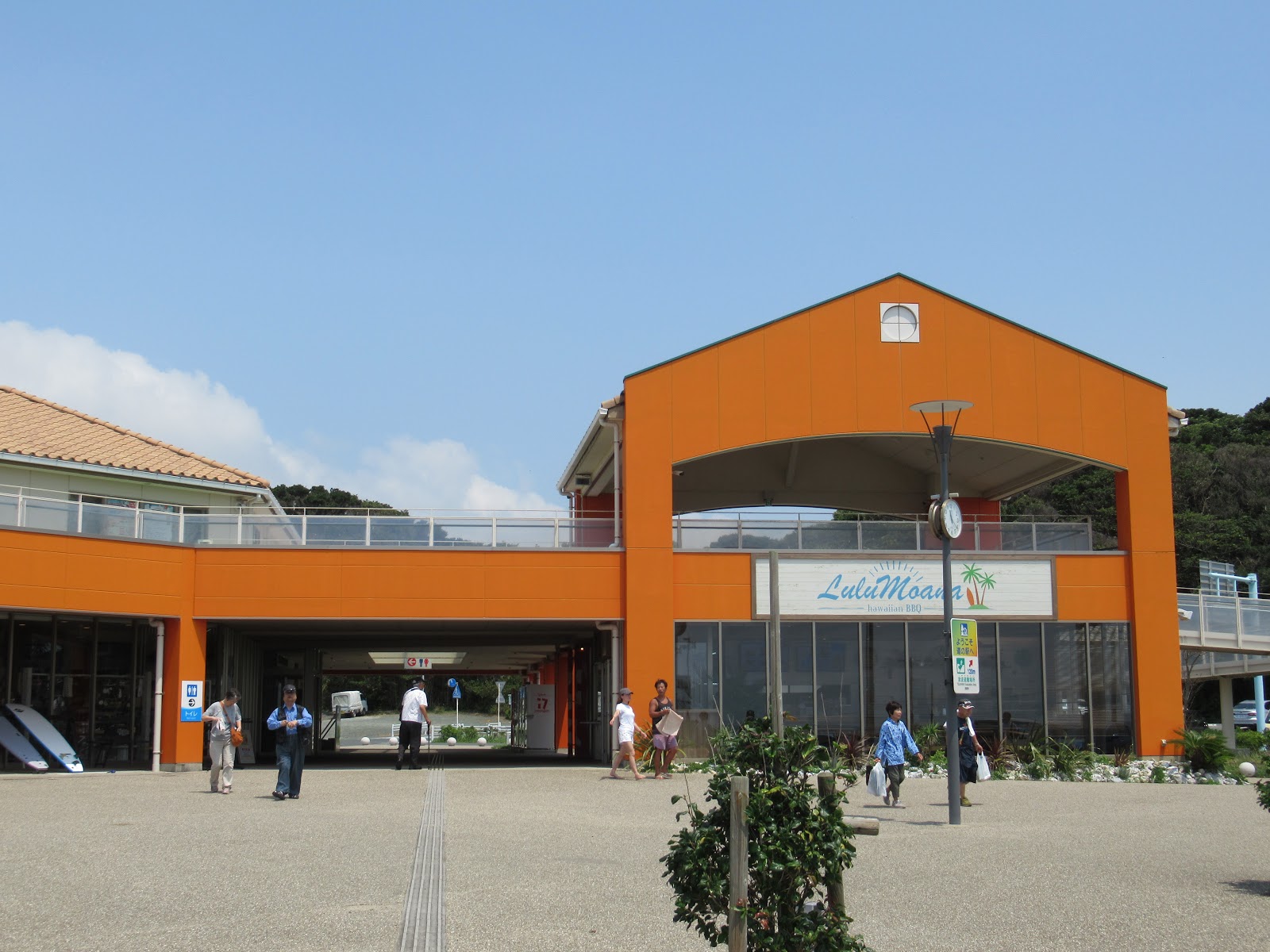
Our first destination was Michin-no-Eki Akabane Loko Station. Michin-no-Eki (station on the road) is a rest area along a major road where you can find local specialties, eat meals, and got some tourist information, etc. (for details, search with “Michi-no-Eki). Akabane Loko Station is a bright orange building.


In front of it, you can see the Pacific Ocean. According to the website, Akabane Shore is one of the hottest surfing spots in Japan.


In the building, there were local vegetables and fruits, especially melons, sold at more reasonable prices than in Hamamatsu.


There were also flowers. We were amazed at their prices.


There were many chrysanthemum flowers. Since they are often used for funerals, I don’t like them very much. I learned later that Atsumi Peninsula has the highest yield of chrysanthemum flowers in Japan.

Personally, I prefer roses. My mother bought a bunch, which cost only 120 yen!


Vegan sweets in August

Today is Sunday, and I have just returned home from the downtown. The temperature is over 30 degrees outside. At this time of year, it may be much more refreshing to eat fruits than sweets, however, I still like to eat some agar jelly. In Entetsu Department Store, I found several kinds of agar jelly with beautiful design for summer, such as gold fishes in water, but I was not sure if they were vegan. They contained a gelling agent, which can be an animal product. In the shop of Kano Shojuan (叶匠寿庵), I could find vegan jelly at last. It was Hakuto (white peach) Mitsumame.


Mitsumame is a common dessert found in cafés that serve Japanese sweets. It usually consists of small cubes of agar jelly (usually not colored), red peas, and syrup. I heard the red peas are used to give an accent to mitsumame. They are boiled but a little hard.

This Hakuto Mitsumame had jelly cubes colored with food colors (carotenoid, copper chlorophyll) and a slice of peach. It was beautiful to see and refreshing to eat. The syrup was sweet and had the flavor of peach blending into it. According to some websites, this product seems to be popular as a summer gift.

In another shop Ryoguchiya Korekiyo (両口屋是清) in the department store, I found a cute sweet imitating a watermelon. It’s a kind of kingyokukan, a sweet made from agar, sugar, starch syrup, etc. This product also contained, watermelon, white and red kidney beans, adzuki beans, concentrated juice of melon, etc.


The adzuki beans were used to represent seeds of a watermelon. The top of the sweet has stripes, resembling the skin of the fruit. It was elaborately made. I could feel the distinctive taste of a watermelon, though it seemed to contain much bean paste as well. This “Watermelon” is one of the products of a series called “Sasaragata.” There are also kingyokukan with flavors of pineapple, white peach, and lemon. I wonder how other products taste. Ryoguchiya Korekiyo is an old confectionary shop founded in 1634, but this series is very modern and cute.

Thursday, August 1, 2019

Black sesame doufa in Singapore Fair

Several years ago, I went to Taiwan to enjoy excellent food. It is a paradise for vegetarians, and I could try some food that didn’t exist in Japan at that time. One of them was doufa, a dessert made from soybeans. It resembles tofu but is eaten with sweet syrup. Though doufa, is still difficult to eat in restaurants in Japan, I found one sold in Seijo Ishii in the station building today. The name of the product was “Black Sesame Doufa with Organic Soymilk and Coconut.” It was one of the items of Singapore Fair. It seemed to be vegan.


It was luxurious doufa with many ingredients. Since the toppings were in a separate case in the outer case, I put them on the black sesame doufa first. They were walnuts, coconut cream, goji berries, sweet potatoes cooked with sugar, and a coconut ball made from bracken starch and stuffed with adzuki paste. The last one was very interesting because I had never imagined a combination of bracken starch and coconut powder. I wondered if it was better to eat these toppings together with the sesame paste doufa but ate them separately. The coconut cream, coconut ball, and cooked sweet potato were all sweet. Goji berries are something we don’t use very much in Japan. I like to eat them in Chinese food, but those sold in supermarkets are quite expensive. They are winning popularity as they are rich in vitamin C and good for anti-aging and beauty.


The black sesame doufa consisted of two layers. The black sesame paste contained also adzuki bean paste and was very sweet The doufa on the bottom softened the sweetness. Since I had already tasted several toppings with many ingredients, the flavor of doufa itself felt weak. Maybe I prefer doufa with simple syrup, like one served in Taiwan.


Another specialty of Taiwan, tapioca milk tea is the latest fad in Japan. Even in Hamamatsu, I have seen some restaurants and shops that have introduced it to their menu, like MOS BURGER for example. I wonder if there are any shops that have tapioca soymilk tea, a vegan version of tapioca drink. Maybe I can make it by myself if I can find ingredients.

Happy New Year of Ox 2021

If you are in Japan during the year-end and New Year holidays, you can see many pretty sweets at Japanese confectionary stores. As 2021 is t...